Resistor Color Coding & Multimeter
By the end of this lesson, you should be able to identify common resistor values and perform basic measurements using a multimeter.
In the previous lesson, we learned about LEDs and resistors and built our first LED circuit.
In this lesson, we will learn two very useful skills:
- 🟫 How to identify a resistor's value using its color bands
- 🔧 How to use a multimeter to measure and test electronic components
By the end of this lesson, you should be able to identify common resistor values and perform basic measurements using a multimeter.
Why Do Resistors Have Color Bands?
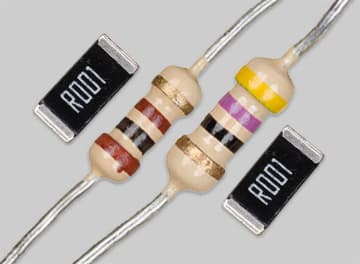
Small resistors usually don't have enough space to print their resistance value as a number.
Instead, colored bands are printed around the resistor.
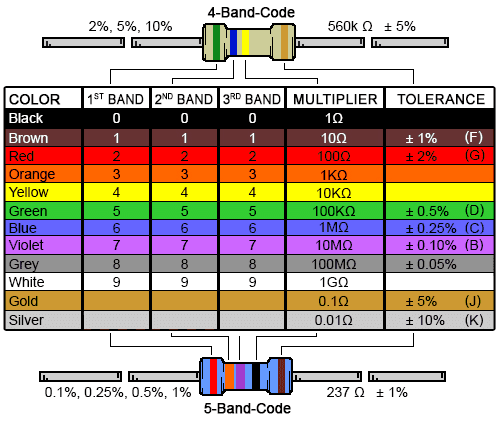
Each color represents a number.
For example:
     ┌─────────────────┐
─────│ 🟫 🟥 🟨 🟨     │─────
     └─────────────────┘
       ↑  ↑  ↑  ↑
       │  │  │  └── Tolerance
       │  │  └───── Multiplier
       │  └──────── Second digit
       └─────────── First digit
By reading these colors, we can determine the resistance value.
Resistor Color Code
What Is a Multimeter?
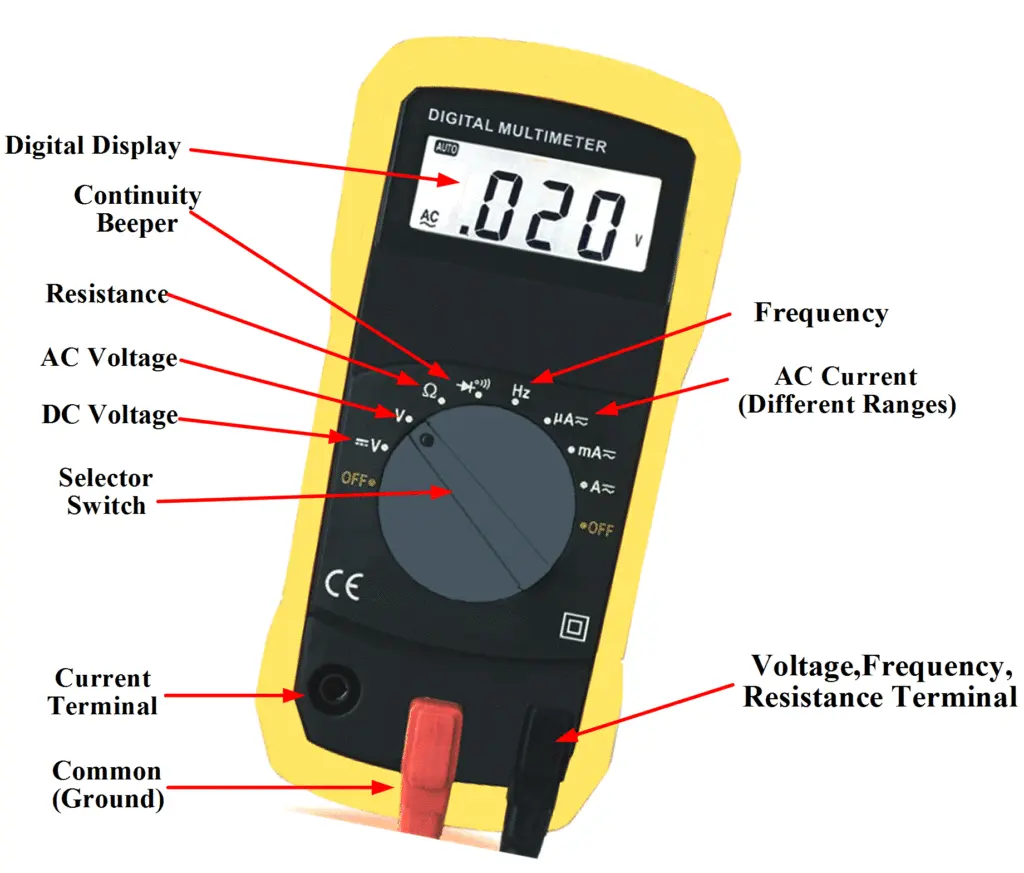
Multimeter is a measurement tool used to measure different electrical quantities.
A digital multimeter may allow you to measure:Voltage
Resistance
Current
Continuity
Some multimeters can also measure:
- Capacitance
- Diodes
- Frequency
- Temperature
The exact features depend on the model.
A multimeter is one of the most useful tools for anyone learning electronics.
What You Learned
In this lesson, you learned how to:
- Understand resistor color codes
- Understand resistor tolerance
- Identify common resistor values
- Use a digital multimeter
- Measure DC voltage
- Measure resistance
- Test continuity
- Test a switch
- Perform a basic LED diode test
These are some of the most useful basic skills in electronics.