Potentiometer: LED Brightness Control
In this lesson we will learn about a special type of resistor called a potentiometer.
In the previous lesson, we learned how to identify resistor values using color codes and how to use a multimeter to measure voltage, resistance, and continuity.
Now we will learn about a special type of resistor called a potentiometer.
Unlike a normal resistor, a potentiometer allows us to change the resistance manually.
In this lesson, we will learn:
- 🎛️ What is a potentiometer?
- 🔄 How a variable resistor works
- 🔌 Potentiometer terminals
- ⚡ How resistance changes
- 💡 How to control LED brightness
- 🧪 How to build an LED brightness control circuit
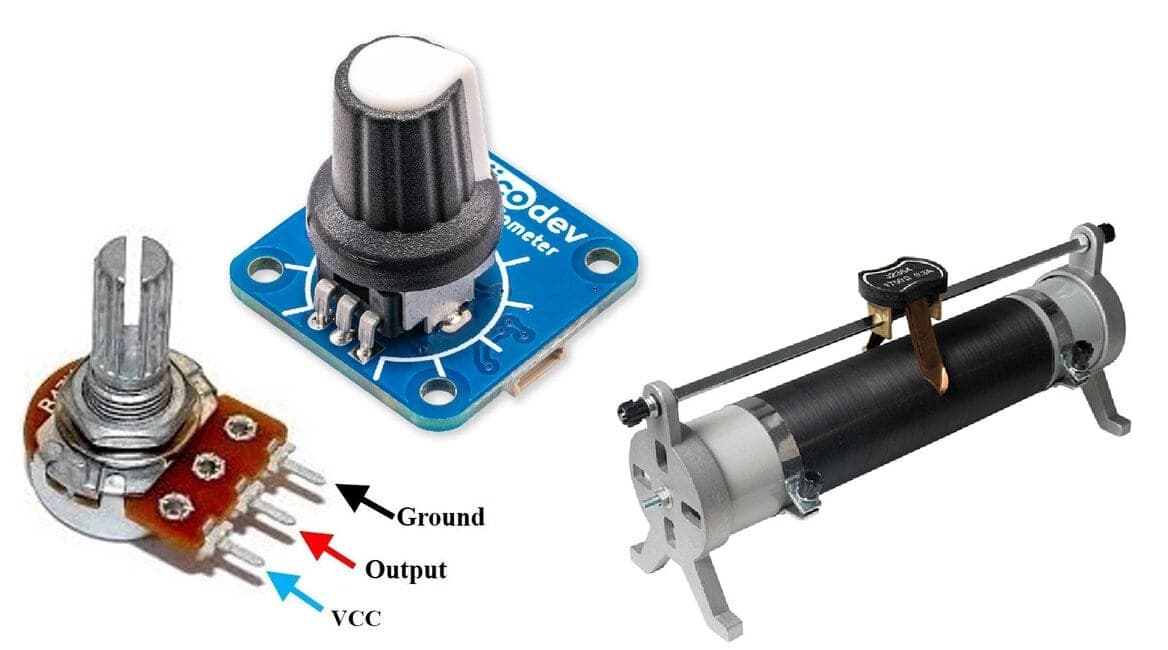
What Is a Potentiometer?
A potentiometer is a type of variable resistor.
A normal resistor has a fixed resistance:
220 Ω → Always approximately 220 Ω
A potentiometer allows us to adjust its resistance:
0 Ω ←──────→ 10 kΩ
The exact range depends on the potentiometer.
You can change its resistance by rotating its knob.
This makes potentiometers useful when we want to adjust something manually.
For example:
- 💡 LED brightness
- 🔊 Volume control
- ⚡ Adjustable voltage
- 🎚️ Settings and controls
- 🎮 User input
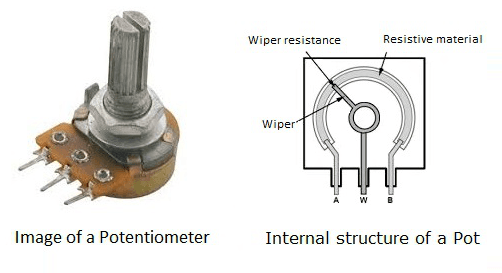
Potentiometer Symbol
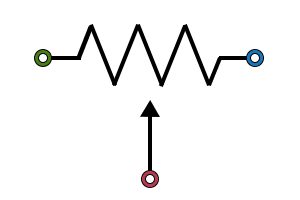
How Does a Potentiometer Work?
The three terminals are:
- Terminal 1: VCC
- Terminal 2:Output
- Terminal 3:Gnd
The middle terminal is normally connected to the wiper.
The wiper moves across the resistive material when the knob is rotated.
Usually:
Pin 1 → One end of resistive element
Pin 2 → Wiper
Pin 3 → Other end of resistive element
The total resistance between Pin 1 and Pin 3 remains approximately constant.
When you rotate the potentiometer, the wiper moves.
This changes the resistance between the wiper and each outer terminal.
Project — LED Brightness Control
Objective
Build a circuit where rotating a potentiometer changes the brightness of an LED.
Components Required
- 1 × Breadboard
- 1 × LED
- 1 × Potentiometer
- 1 × Fixed resistor, such as 220 Ω or 330 Ω
- 1 × Low-voltage power source
- Jumper wires
Circuit Diagram
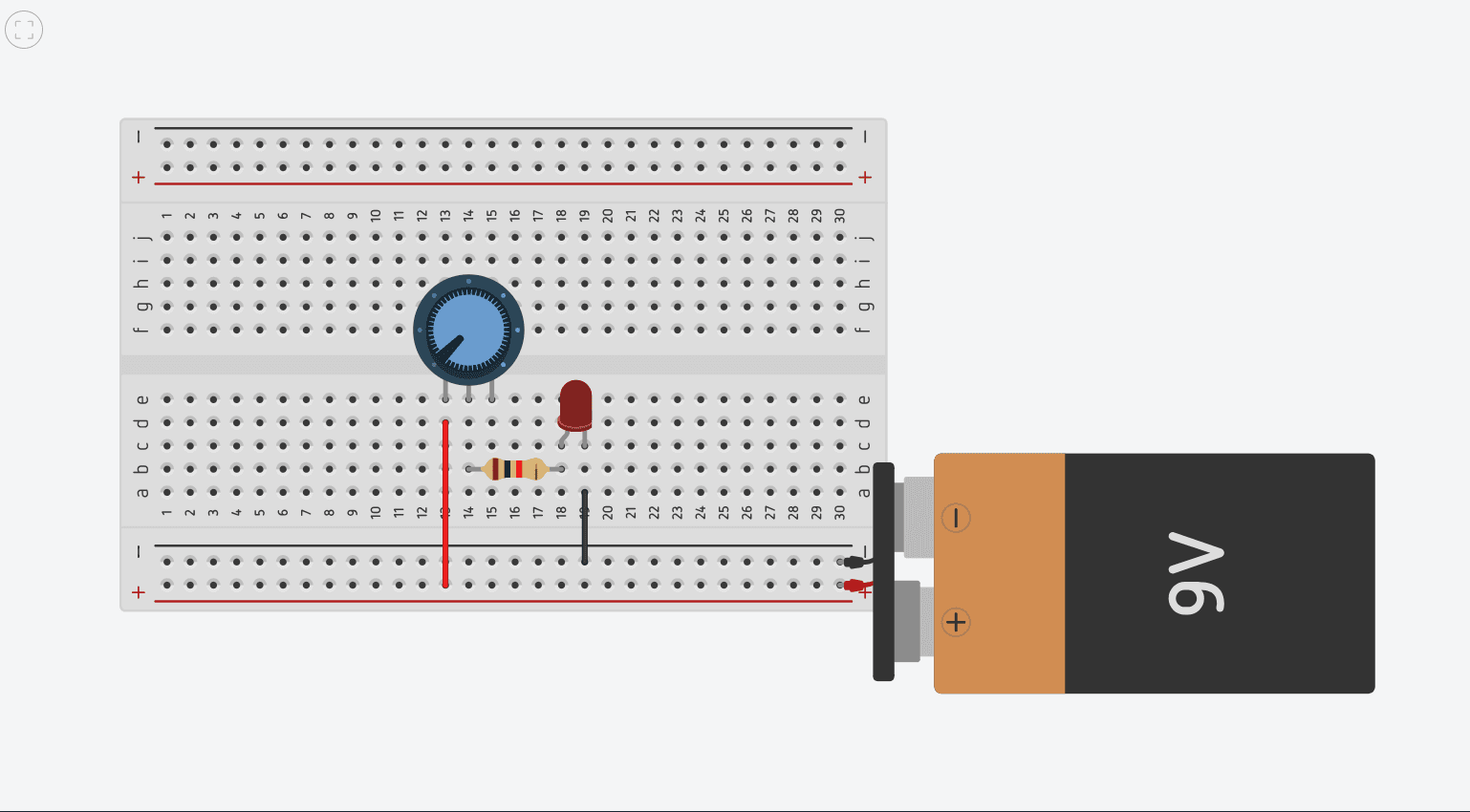
What's Happening Inside the Circuit?
Let's understand the process.
When the potentiometer provides higher resistance:
Higher resistance
       ↓
Lower current
       ↓
Dimmer LED
When the potentiometer provides lower resistance:
Lower resistance
       ↓
Higher current
       ↓
Brighter LED
The fixed resistor provides additional current limiting and helps prevent excessive LED current when the potentiometer is adjusted to a very low resistance.
What You Learned
In this lesson, you learned:
- 🎛️ What a potentiometer is
- 🔄 How a variable resistor works
- 🔌 The three terminals of a potentiometer
- 🎚️ What the wiper does
- ⚡ How resistance changes when the knob is rotated
- 💡 How resistance affects LED current
- 💡 How to control LED brightness
- 🧪 How to build an LED brightness-control circuit
The important idea to remember is:
Potentiometer → Adjustable resistance → Adjustable current → Adjustable LED brightness